

What the best do, and why it can be taught
Skill Modeling is the study of how a human competence is actually built, and of how it can be handed on to someone else.
An Identity We Never Owned
Alexander Douglas, a philosopher at St Andrews, reaches through Spinoza, Zhuangzi and Girard the observation the Experience Matrix is built on: we do not find our identity within ourselves, we borrow it. Then he stops where the work of coaching begins.

What Will Make the Difference in the Age of AI
Pure knowledge is becoming an abundant resource. And what is abundant loses its value. There is, however, a gap that AI does not close: the gap between knowing and doing.

The Experience Matrix: A New Cartography of Human Experience
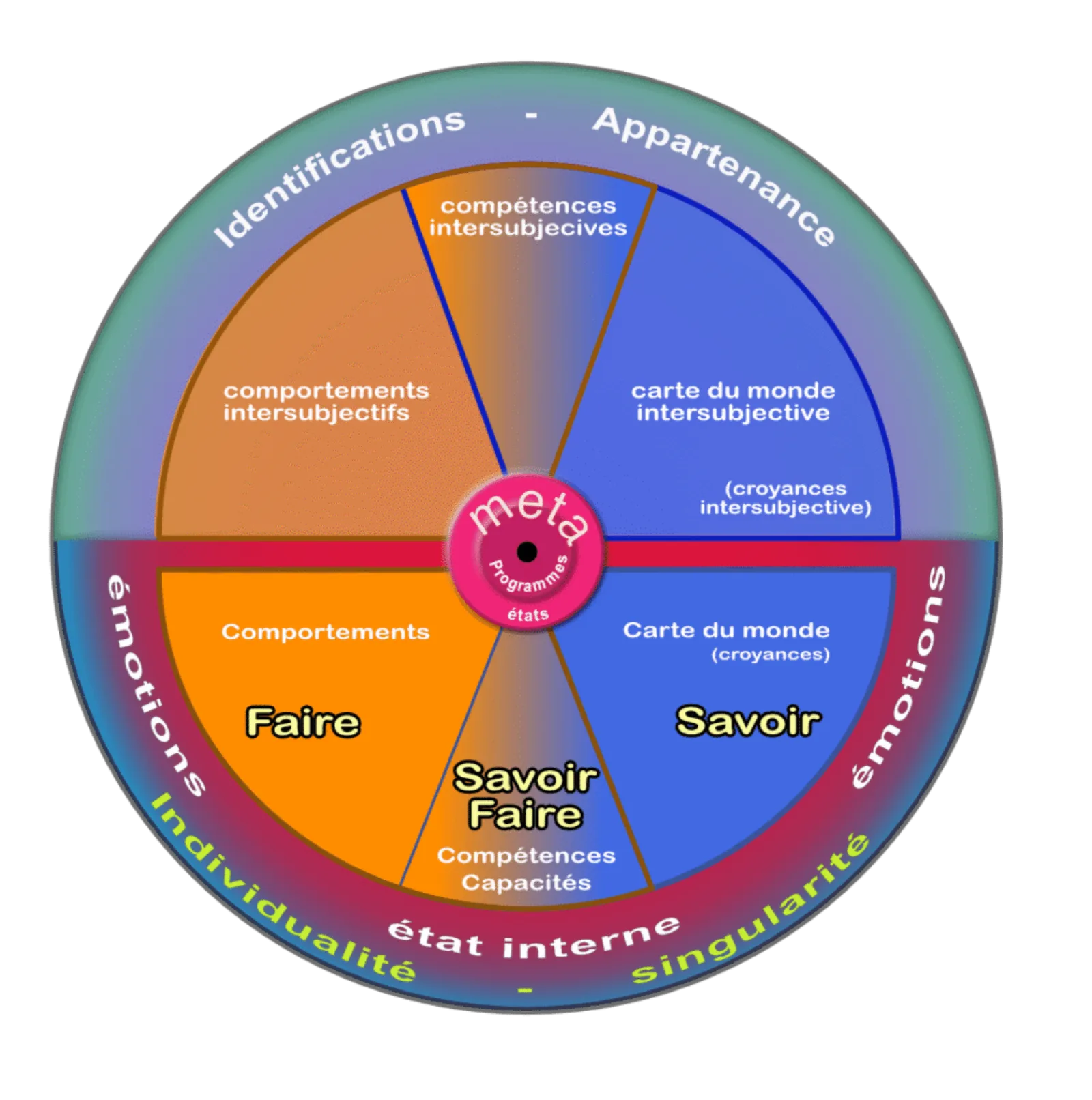
Ask someone who they are and they answer with a list. Every item is true, none of them is the answer. That small vertigo is not a flaw in the question. It is the territory the Experience Matrix sets out to map.
The Inverted World: What If the Matrix Had Come First?
A trainer from a parallel world where the Experience Matrix has been NLP's canonical model for forty years writes to say why the newly proposed logical levels won't do. The objections usually aimed at the Matrix, turned around and sent the other way.

Context Does More Than We Think
In 2020, two researchers, Roope Kaaronen and Nikita Strelkovskii, published a study in the scientific journal One Earth. They wanted to understand one specific thing: how a behaviour spreads through a group of…
What experts cannot tell you
Ask a skilled person how they do it, and the answer is usually wrong. Not because they hide it, but because competence disappears from view as it matures.
NLP 2.0: The Magic is You (and the Matrix Explains It)
“NLP doesn’t work. You work. NLP just explains perfectly how you work.“ This sentence, spoken by the New Zealand practitioner Richard Bolstad, has the merit of setting the record straight. For too long,…

Dilts on Identity, Reread Through the Experience Matrix
Robert Dilts's 1998 Montreux seminar took identity seriously as few in NLP had. Read faithfully first, then through the categories of the Experience Matrix: not to correct him, but to see what a different set of divisions brings into view.

From Pyramid to Matrix
The logical levels are the Newtonian physics of coaching: reliable under ordinary conditions, strained by real human complexity. Four shifts, read through Edgar Morin, show what a matrix does that a pyramid cannot.

Wisdom Lives in Widening Circles
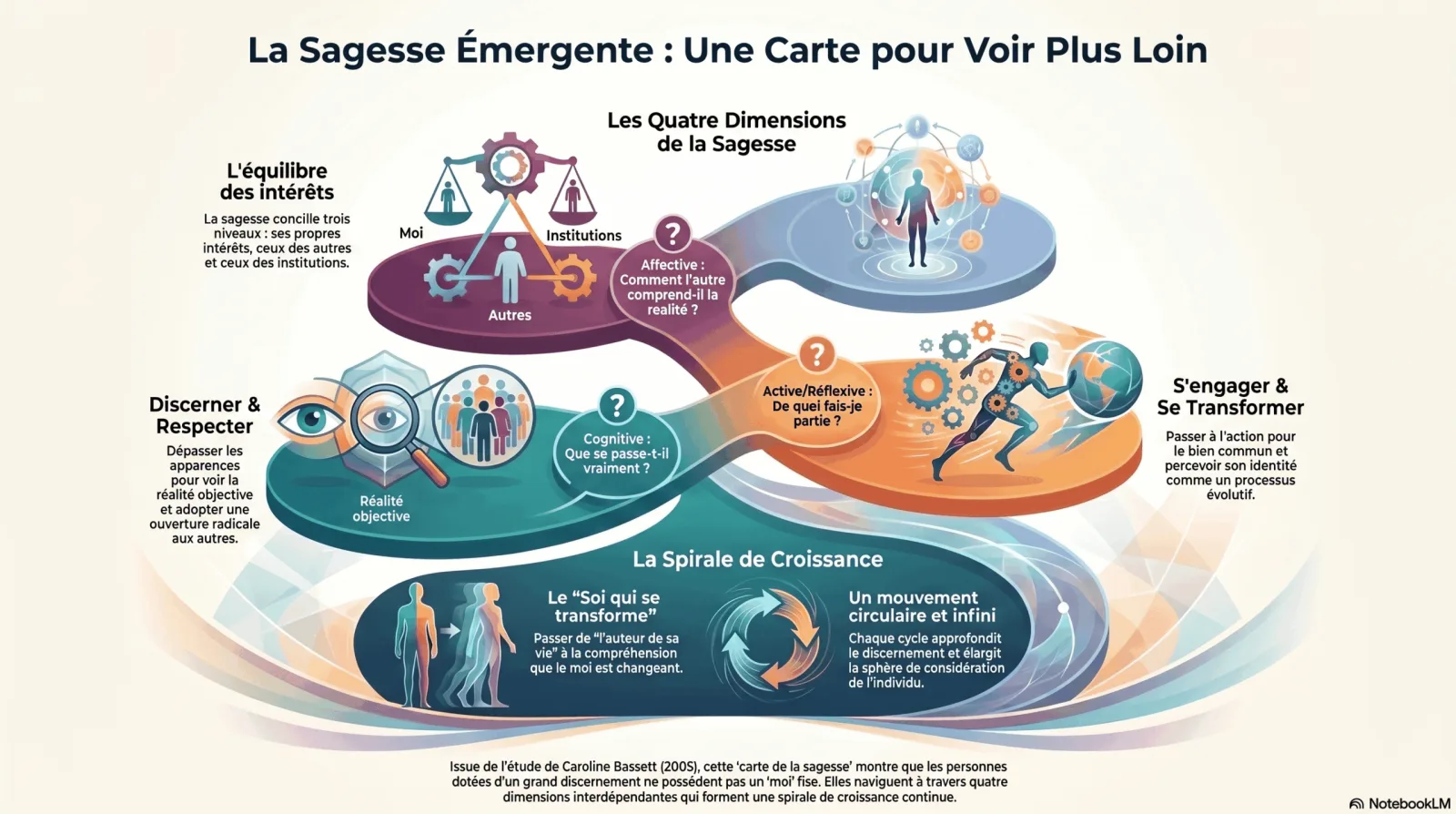
Twenty-four people known for their judgment turned out to share one unexpected trait: none of them experienced themselves as a fixed self. Caroline Bassett's map of wisdom lands remarkably close to the Meta space and the Identifications space.
When a Belief Becomes a Prison
Nir Eyal names the trap precisely: turning a belief into an identity builds a cage of your own making. His diagnosis is exact, and he stops there. The Experience Matrix offers the way out.

Can We Grow Without Betraying Ourselves?
Leila Slimani carries the melancholy of no longer being who she was; Jean Luchaire drifted into collaboration without ever deciding to. The same mechanism runs through both: our identifications shift over time, and we do not always know what we are becoming.

When the “Second Brain” Devours the First
Reflections from the PKM Summit 2026 — Utrecht, March 2026. If PKM systems augmented by artificial intelligence become prostheses for our basic cognitive functions — memory, association, synthesis, judgement — then…

Five Things "Environment" Cannot Hold
The Experience Matrix replaces environment with Context, and the change of word is not cosmetic. Fifty years of work in cybernetics, biology and sociology explain what the older term leaves out.

Defining a Life Project: Two Routes Compared
A workshop using Dilts's logical levels for life-project work has to add a level, invent another, and relocate a third to make the model fit. The Experience Matrix offers the same work without the improvisation.
From Logical Levels to the Experience Matrix: When Identity Calls for Another Look
Behaviors, capabilities, beliefs: the logical levels handle all three admirably. It is at the identity level that the map runs out, and that is exactly where the Experience Matrix picks up.

What NLP's Own Critics Say About the Logical Levels
Grinder, Andreas, Hall and Woodsmall have each dismantled a different part of Dilts's logical levels. Set side by side, their objections explain why newer models had to appear.

Identifications: The Relation and the Category
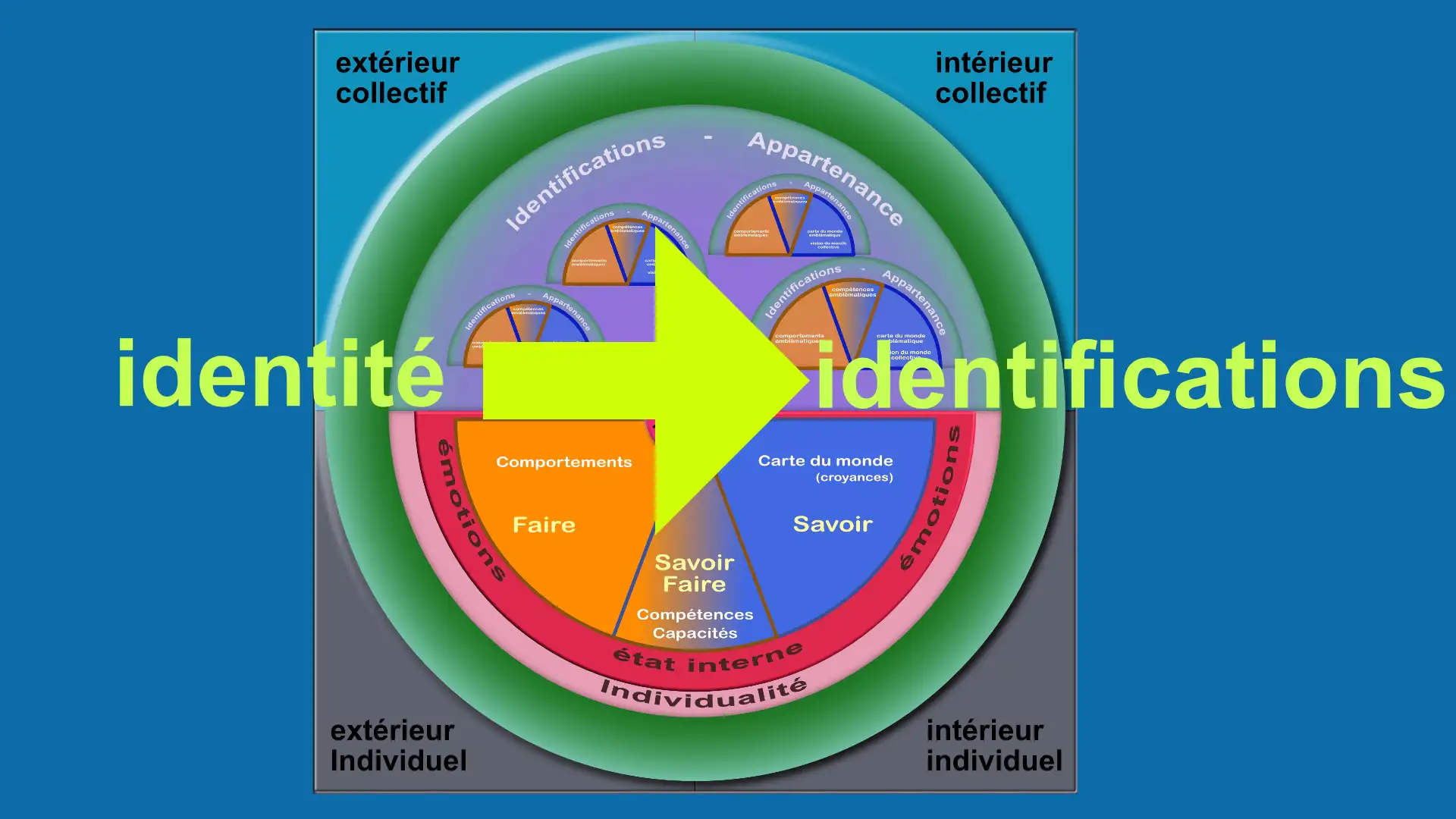
An identification is a relation between a person and a recognized category of people. Taking that relation apart, its category, its scope, its chosen prototype, turns "I am..." into three distinct places where change becomes possible.
From Critique to Redefinition: Identity as Constructive Narrative
Criticizing the identity level for its vagueness was necessary and got nowhere on its own. Redefining identity as the narrative we build about our experience gives the concept something a practitioner can actually work with.
The Secure Self, Read Through the Experience Matrix
A 1990 NLP procedure asks people to find their mission. The Experience Matrix asks who is supposed to be assigning it, and the answer changes what the work consists of.

From Phenomenology to Coaching: Three Worlds, One Structure
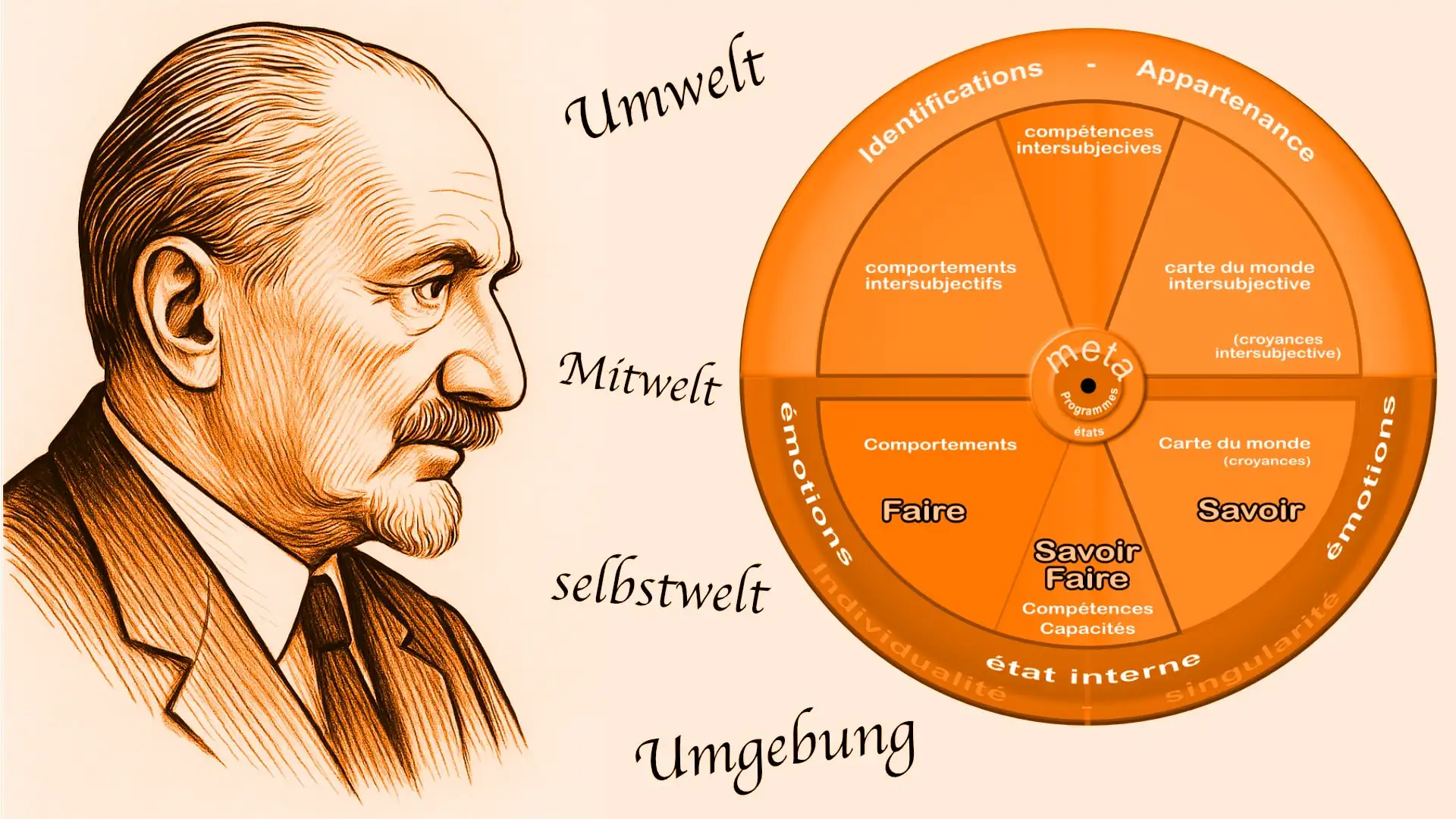
Selbstwelt, Umwelt and Mitwelt give a practitioner three axes for locating where a client's discomfort actually sits. They also converge, closely enough to be worth explaining, with the Experience Matrix.
From Environment to Context: Umgebung, Umwelt and the Experience Matrix
Two German words separate the environment as it objectively is from the world as it is lived. That distinction is the reason the Experience Matrix speaks of context rather than environment, and it changes what a practitioner listens for.

From the Identity Level to Identifications
Durkheim, Heidegger and Damasio converge on the same point from three directions: we cannot not identify. Which makes the identity level less a summit than a placeholder for something the model never named.
The Identity Trap in Traditional NLP
The logical levels taught us that identity-level change runs deepest and comes hardest. What if the difficulty was never in the work, but in how we conceived of identity in the first place?

Borrowed Desires: Girard and the Identifications Space
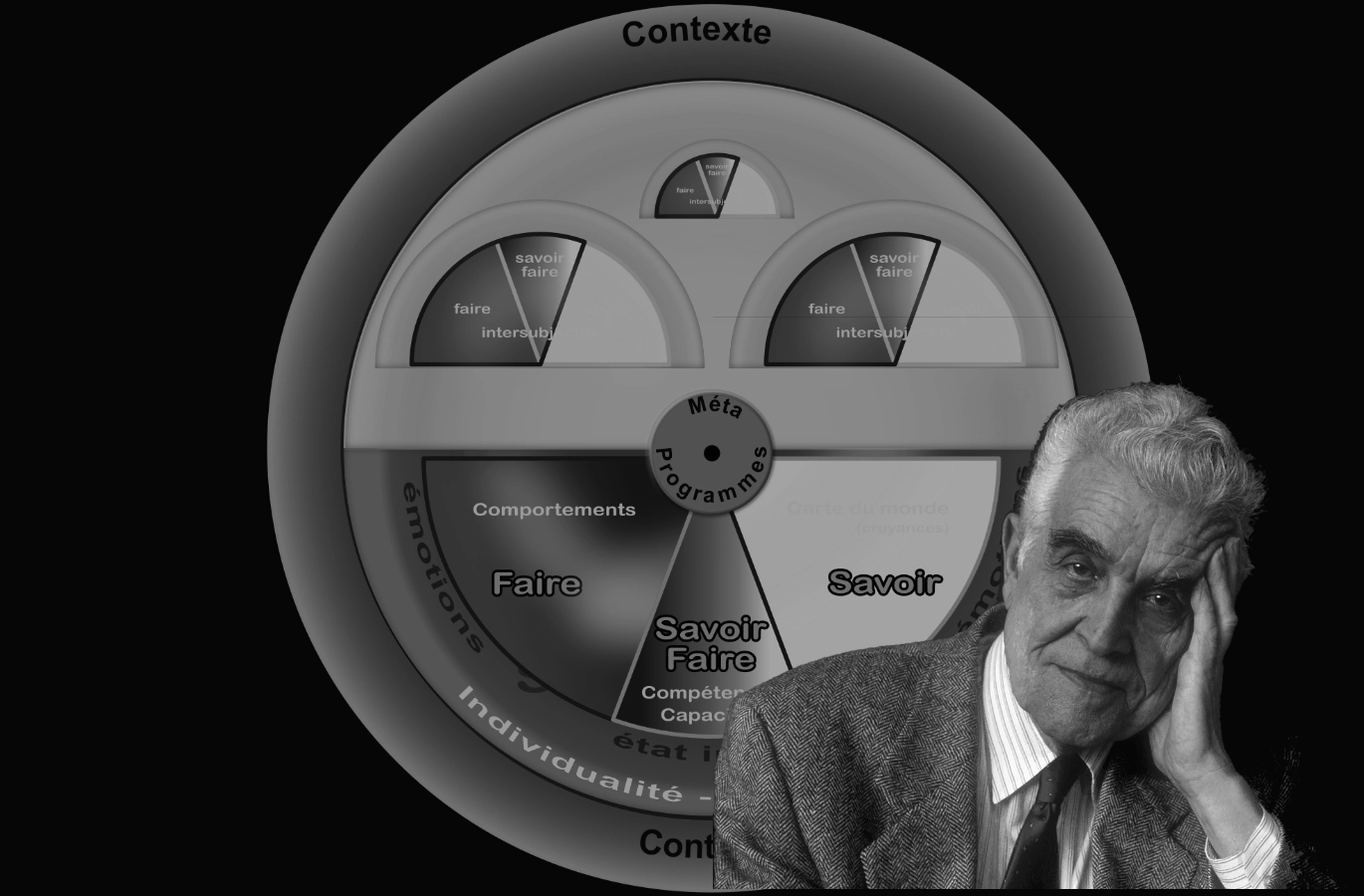
Rene Girard argued that we do not desire on our own, we desire through models we imitate. Read alongside the Experience Matrix, that insight explains where identifications come from and why some of them turn into rivalries.
The Actor and His Hundred Faces
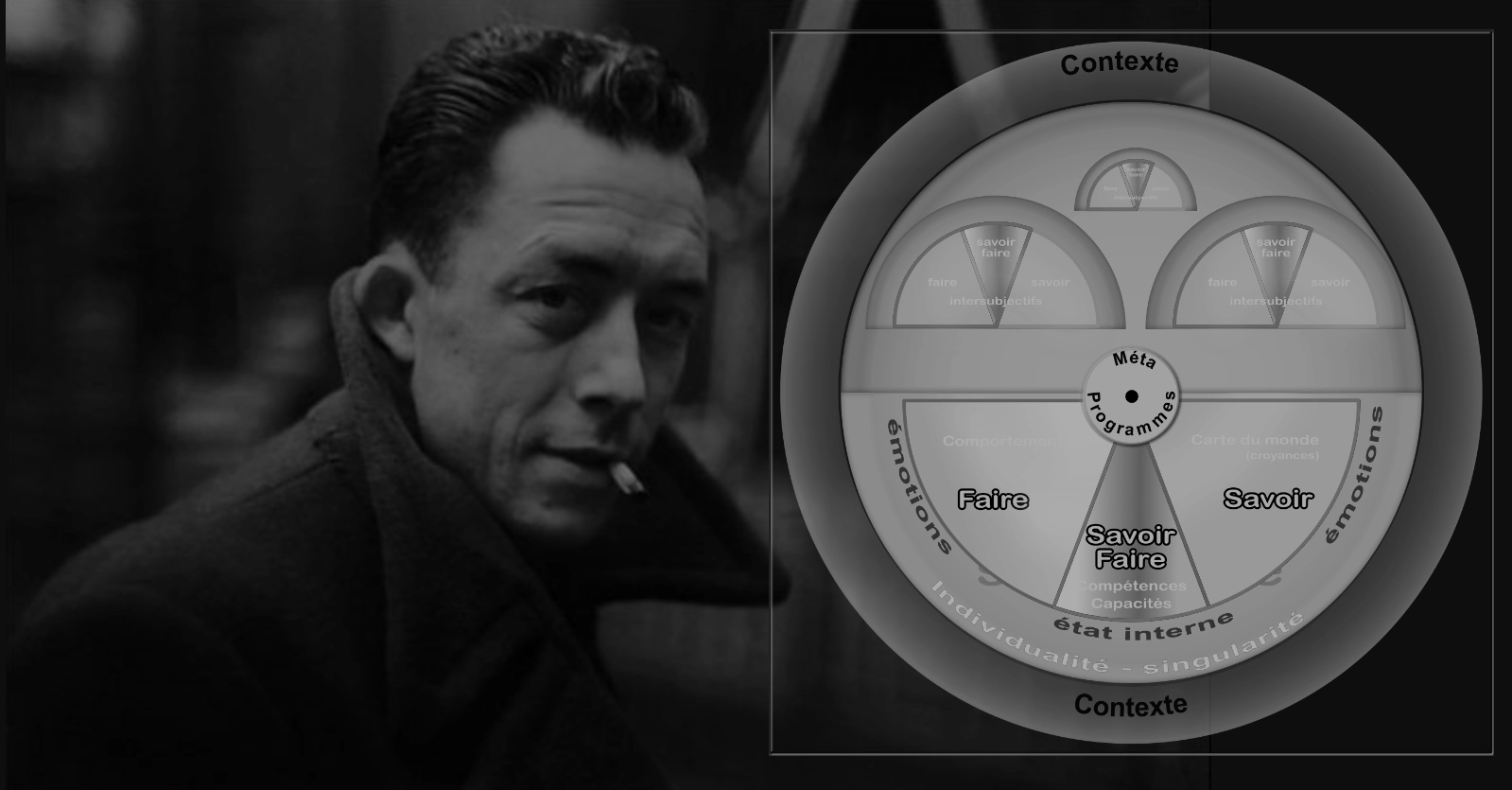
Camus noticed that you know an actor a little better at the hundredth character he has played. The same holds for a person and their identifications, which is why identity works better as a container than as a content.
A Quiet Revolution in Coaching
"That's my identity, that's just how I am" ends most conversations about change. Treating identity as a set of identifications instead reopens them, and turns an impossible job into a gradual one.
Why I Built the Experience Matrix: An Open Letter to NLP Trainers
I deliberately presented the Experience Matrix as the model that would dethrone Dilts's logical levels, and the reaction was predictable. Here is what sits behind the provocation.

Identity Lives in Time
Dilts's identity level implies a stable essence, and that implication quietly blocks change. The Matrix relocates identity to the temporal dimension: a unique signature that emerges from a life, not a structure that governs it.
Stay in touch
New models, articles and work in progress, a few times a year. No more than that.